A Simple Guide for Traders
Algorithmic trading has entered the mainstream as SEBI opens the door for safer retail participation. Along with this shift, two terms have become central in the discussion. White Box algorithms and Black Box algorithms. Knowing the difference helps traders choose tools that match their comfort, transparency needs and regulatory requirements.
What is a White Box Algorithm
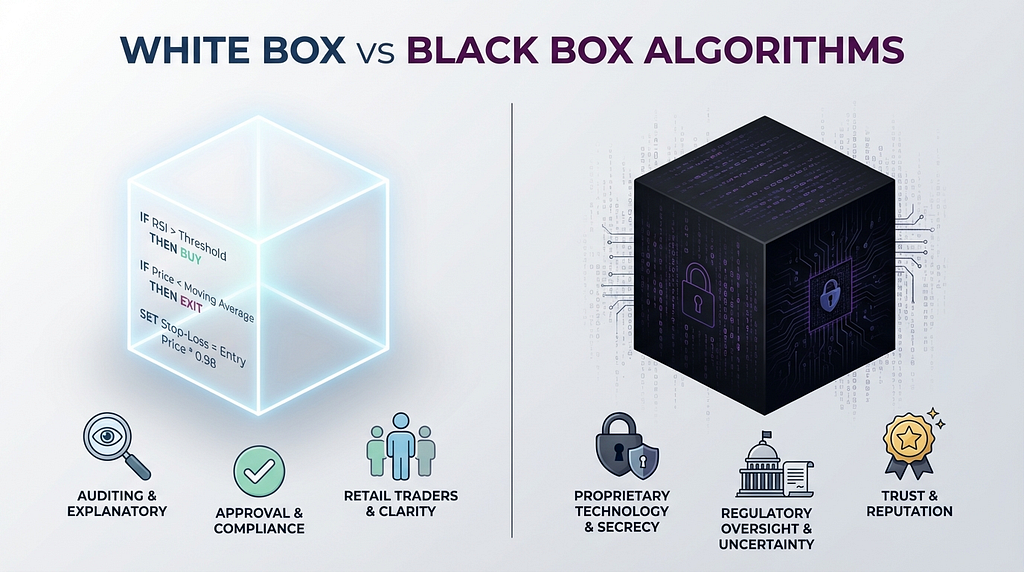
A White Box algorithm is transparent. The trader can see every rule and understand the logic line by line. The behaviour of the strategy is predictable because the conditions for entry and exit are visible. For example, a trader can view rules such as buy when the RSI crosses a particular threshold or exit when the price dips below a moving average.
The clarity makes these systems easier to audit. Exchanges approve them with simpler checks, and brokers can offer them directly to retail traders. White Box systems suit traders who want complete visibility of how decisions are generated.
What is a Black Box Algorithm
A Black Box algorithm keeps its internal logic hidden. Only the provider knows the exact conditions that trigger buy or sell signals. These systems often rely on proprietary models or machine learning based methods that the provider does not disclose.
Since the underlying logic is not visible, the regulatory framework is tighter. Providers must be registered as Research Analysts and maintain strategy documentation that is submitted to the exchanges. Retail traders using these systems rely on the provider’s reputation and on the approval filters put in place by SEBI.
Why This Distinction Matters
White Box systems offer simplicity and clarity. The trader can predict behaviour and understand how the algorithm responds to market signals. This also helps brokers and exchanges monitor unusual activity and maintain system integrity.
Black Box systems offer complexity and sometimes speed or statistical advantage. But they demand trust because the user cannot verify the strategy logic. This makes oversight essential and places more responsibility on the provider.
How SEBI Regulates Them
SEBI has introduced a uniform structure for all algorithms that brokers or third party platforms offer to retail traders. Every strategy must be approved by the exchange and assigned a unique identification code.
White Box systems go through a straightforward approval process because the logic is visible.
Black Box systems must pass detailed scrutiny. Any modification in logic must be reported and reapproved. The goal is to bring transparency where possible and accountability everywhere.
Where OpenAlgo Fits in the Landscape
It is important to note that OpenAlgo itself is not a trading strategy. It is an open source platform that gives traders the freedom to build their own strategies. Nothing is prebuilt or packaged inside it.
Users design their own logic and run it on their own infrastructure or connect it with tools they already use such as Amibroker, Tradingview, Metatrader, Excel, N8N and similar platforms.
Because OpenAlgo only provides the framework and not the strategy logic, the transparency or opacity of the final algorithm depends entirely on what the user creates. The platform simply enables traders to host and execute their own ideas in a flexible and self controlled environment.
Which One Should You Choose
A White Box approach is suitable for traders who want control and complete visibility.
A Black Box approach suits traders who prefer sophistication and are comfortable relying on a provider.
Open source platforms like OpenAlgo sit in the middle. They allow users to build anything they want and decide whether their logic remains visible or private. The trader chooses the level of transparency and the level of complexity.
Both paths can be effective. The choice depends on your comfort with disclosure, your faith in the provider or your wish to build and run your own strategies independently.
